

Holiday outings do not fail because parents forget the stroller or pick the wrong day. They fail because the outing was planned for a child who does not exist yet, or one who existed six months ago. A newborn needs something completely different from a toddler, and a four-year-old needs something different again. The gap between what an outing demands and what a child’s age can actually handle is where most meltdowns, missed naps, and ruined photos come from.
This guide breaks holiday outings down by age, from newborn through five, and pairs each stage with gifts that make the next outing easier instead of harder. The goal is not a longer packing list. It is matching the outing to the child in front of you right now.
Why holiday outings hit differently depending on your child’s age
A one-year-old and a three-year-old can look similar in a stroller, but their nervous systems, attention spans, and physical needs are not close to the same. A newborn’s whole day runs on feeding and sleep windows measured in minutes. A three-year-old can sit through a twenty-minute car ride but may unravel completely in a crowded store. A five-year-old can wait in a line if they understand what they’re waiting for and for how long.
Holiday events add pressure that regular outings don’t: crowds, noise, schedule disruption, new foods, unfamiliar relatives, and lights or decorations that overstimulate before anyone notices it happening. None of that is a flaw in the child. It’s a mismatch between the event and the stage of development the child is actually in.
The fix is not a better attitude or more patience. It’s planning the outing, and the gifts you give, around what that specific age can handle.
Newborn outings: pacing around feeding, sleep windows, and bundling for the cold
A newborn’s outing is really built around two clocks: how long since the last feed, and how long until the next sleep window closes. Holiday events rarely respect either one. A gathering scheduled for 2pm doesn’t know that your baby’s best window is 11am to noon.
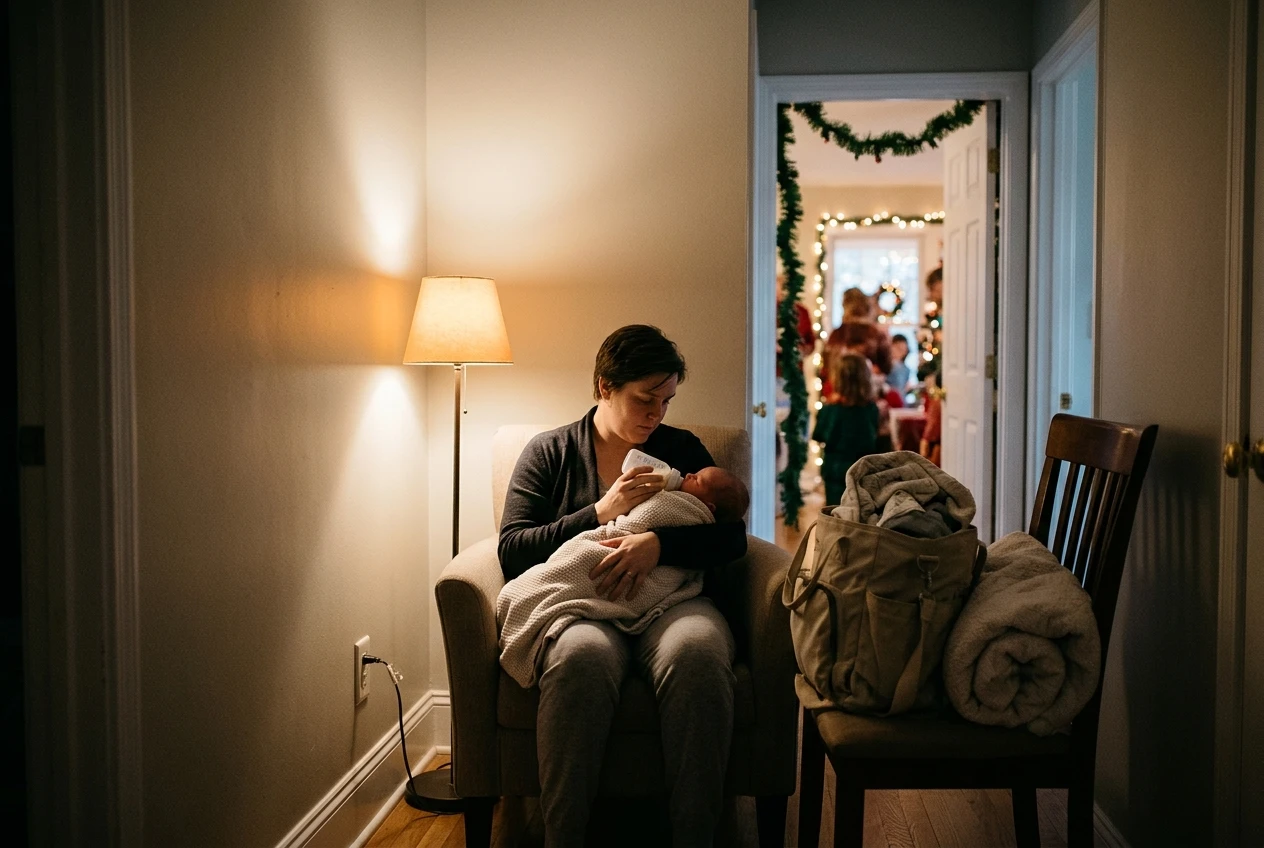
The practical move is to plan the outing around the baby’s rhythm, not the event’s start time. Arrive late if that’s what the feeding schedule needs. Pick a corner of the room near an outlet or a quiet hallway for a feed, and scope it out before you need it. Short outings beat long ones. An hour where the baby is comfortable beats three hours of trying to keep a newborn calm through a loud dinner.
Cold weather adds another layer. Newborns lose heat faster than older babies, so bundling matters more than it will again until next winter. Layers that can come off indoors matter as much as warmth outdoors, since overheating in a warm house is just as disruptive as being cold in the car.
Gifts that help at this stage are rarely toys. A warm, easy-on-easy-off bunting or sleep sack for the car seat, a compact diaper bag organizer, or a car seat canopy that blocks wind and light all reduce the number of decisions a parent has to make mid-outing. A white noise option that’s small enough to clip to a car seat or stroller can also buy an extra twenty minutes of sleep in an unfamiliar, noisy house.
Age 1: stroller naps, babyproofing someone else’s house, and gifts that double as travel gear
At one, a lot of the newborn rules still apply, but mobility changes everything. A one-year-old who is crawling or walking will find every unlatched cabinet, every ornament within reach, and every staircase in a house that was never babyproofed for them.
Stroller naps become a real tool at this age. A one-year-old can often nap on the move in a way a newborn can’t yet reliably do and a toddler won’t do much longer. Timing an outing around a stroller nap, rather than fighting it, can turn a two-hour event into something manageable instead of a countdown to a meltdown.
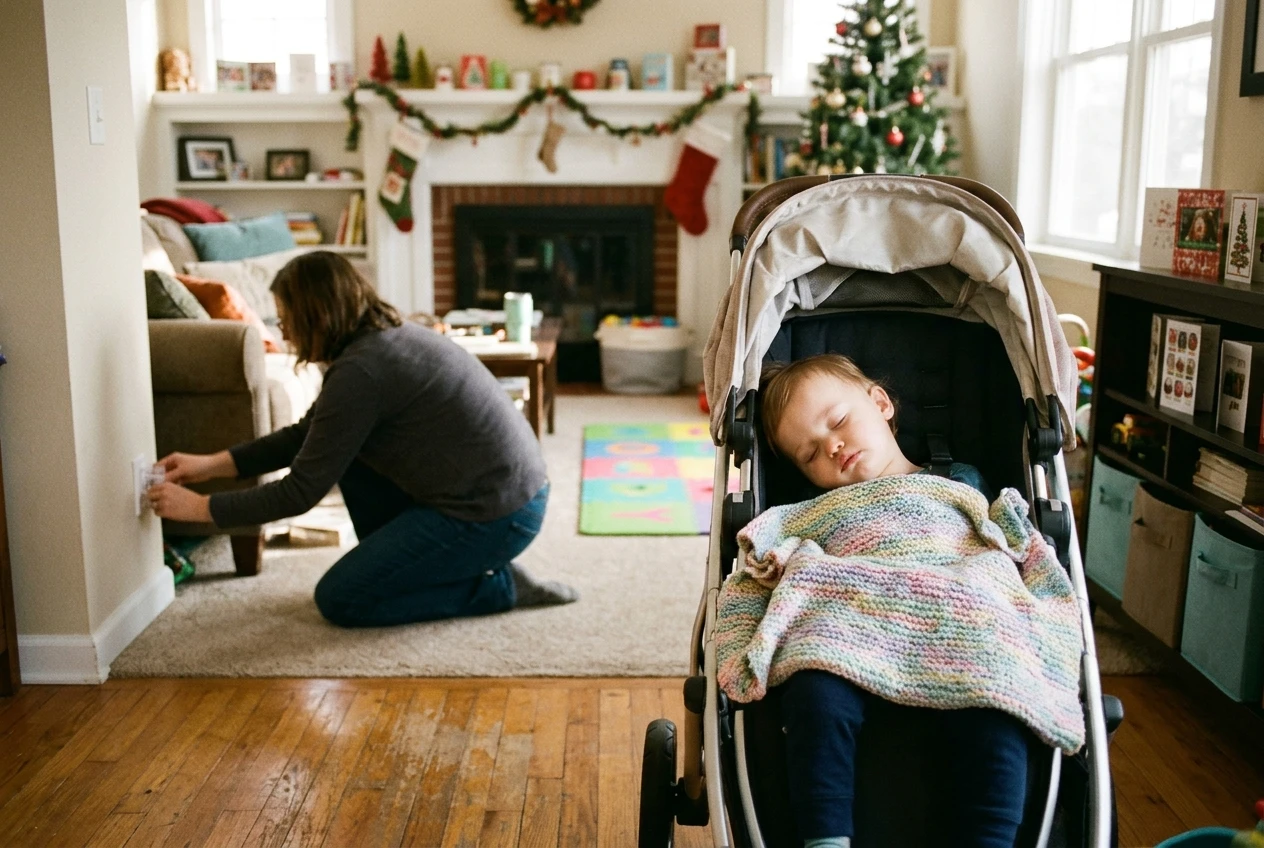
Babyproofing someone else’s house is awkward but necessary. A quick walk-through when you arrive, doing a rough survey for stairs, breakables, cords, and small objects, costs five minutes and prevents most of the afternoon’s emergencies. Bringing a few outlet covers or a portable gate corner in a bag isn’t overkill if the house will be full of relatives who aren’t used to a mobile one-year-old.
Gifts at this age do well when they double as travel gear. A ride-on toy that folds flat, a stroller organizer with cup holders and a phone pocket, or a compact travel high chair that attaches to any table all solve a problem the parent is already carrying around in their head. A soft book or two with no small parts gives the child something familiar to hold in a new environment, which matters more than the book’s content.
Age 2: meltdown triggers in crowds and how to shorten the outing before they start
Two is the age where holiday outings most often go sideways, and it isn’t bad behavior. A two-year-old has big feelings, very little language to express them, and almost no built-in ability to self-regulate in a loud, bright, unfamiliar space. Crowds, lines, and waiting are the three most common triggers.

The useful skill here isn’t managing a meltdown once it starts. It’s reading the signs early enough to shorten the outing before it gets there. Overstimulation in a two-year-old usually shows up as increased clinginess, sudden silliness that escalates fast, or flat refusal over something small, well before the full meltdown hits. Treating those as the signal to leave, rather than pushing through for one more photo, is what keeps the outing a good memory instead of a bad one.
Building in an exit plan matters as much as building in the outing itself. Parking close, choosing an event with a clear and easy way out, and deciding in advance on a time limit (not a goal, just a limit) all make it easier to leave before things turn, rather than after.
Gifts that help at two are things that give a two-year-old a sense of control in an environment where they have almost none: a small backpack they can wear and pack themselves, a set of noise-reducing headphones for loud events, or a simple fidget toy that fits in a coat pocket. None of these prevent every meltdown. They reduce how often the outing tips over into one.
Age 3: building excitement without overstimulation, plus quiet-time toys for the car or plane
Three-year-olds can anticipate an event in a way a two-year-old mostly can’t, which is a gift and a risk at the same time. Talking up a holiday outing for days can build genuine excitement, but it can also build it past the point where the actual event can match it, and the letdown shows up as a meltdown that looks unrelated to anything that just happened.
The balance is to build excitement close to the event rather than far ahead of it, and to describe what will actually happen rather than letting a three-year-old’s imagination fill in the gaps. “We’re going to see lights and then go home” sets expectations a three-year-old can hold onto. A vague, big buildup with no concrete shape to it leaves room for disappointment.
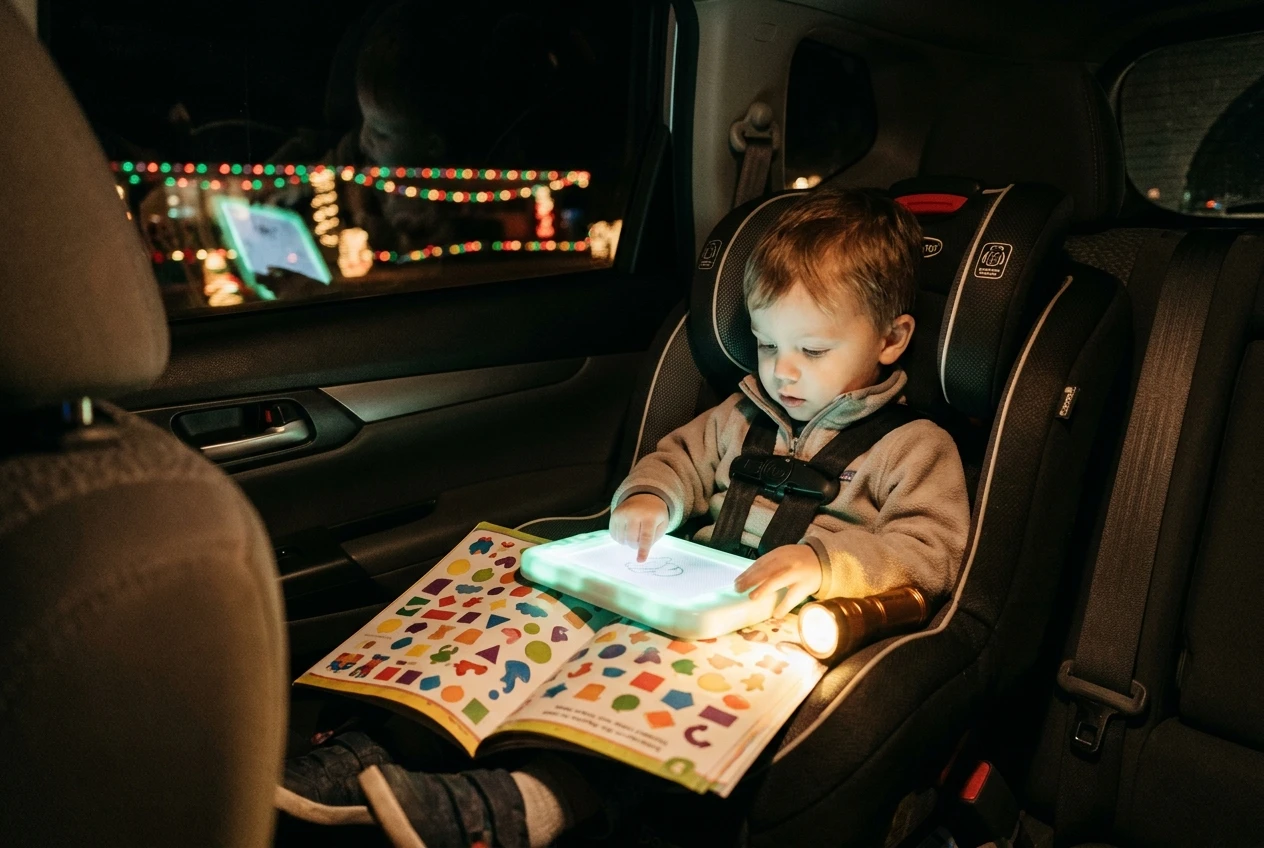
Quiet-time activities matter more at three than at almost any other age, because three-year-olds are old enough to sit for a car ride or a flight but not yet old enough to self-direct that time without help. A small bag of items that only come out during travel, novel enough to hold attention precisely because they aren’t everyday toys, works well here: sticker books, magnetic drawing boards, a small set of figures that stay in the bag.
Gifts worth considering at this age lean toward quiet, contained, travel-friendly play: a wind-up or battery-free toy that doesn’t need volume to be fun, a simple matching or sorting game that fits in a glove box, or a small flashlight for looking at lights and decorations up close, which gives a three-year-old something active to do with their hands and attention during a long walk through a lit-up neighborhood or event.
Age 4: giving them a job on the outing so they feel in charge of something
Four is the age where a child can genuinely help, not just be managed, and giving them a real job during the outing changes their experience of it. A four-year-old who is in charge of holding the map, carrying a small bag, or being the one who finds the car in the parking lot has a reason to stay engaged instead of a reason to act out.
This works because four-year-olds are old enough to want some control but still mostly cooperative about how they get it, which is a narrow window worth using. A job doesn’t need to be complicated. “You’re in charge of finding three red ornaments” or “you hold the tickets” gives a four-year-old a sense of purpose that a vague instruction to “be good” never does.

This age also starts to understand simple rules about an outing in advance: how long it will last, what’s expected, and what happens if they need a break. Walking through that plan together before leaving the house, in simple terms, cuts down on mid-outing negotiation.
Gifts that support this stage give a four-year-old something to be in charge of: a small camera they can use to take their own pictures of the lights, a simple pair of binoculars, a clipboard with a scavenger hunt list for things to spot at the event, or their own small flashlight or lantern. All of these hand over a role rather than just a toy.
Age 5: first real participation in holiday traditions and gifts that reward patience and waiting
Five is often the first year a child can genuinely participate in a tradition rather than just be present for it: helping decorate, choosing a gift for someone else, sitting through a full meal, or waiting in a line without it becoming the main event of the outing. The patience a five-year-old can hold, especially if it’s been practiced in smaller doses beforehand, is a real developmental shift from the year before.
That patience is still new, though, and it works best when it’s rewarded rather than assumed. A five-year-old who waits well through a long line or a slow dinner benefits from knowing, in advance, what that waiting is for and that it will be acknowledged. This isn’t about bribery; it’s about making the connection between patience and outcome visible to a child who’s only just old enough to track it.
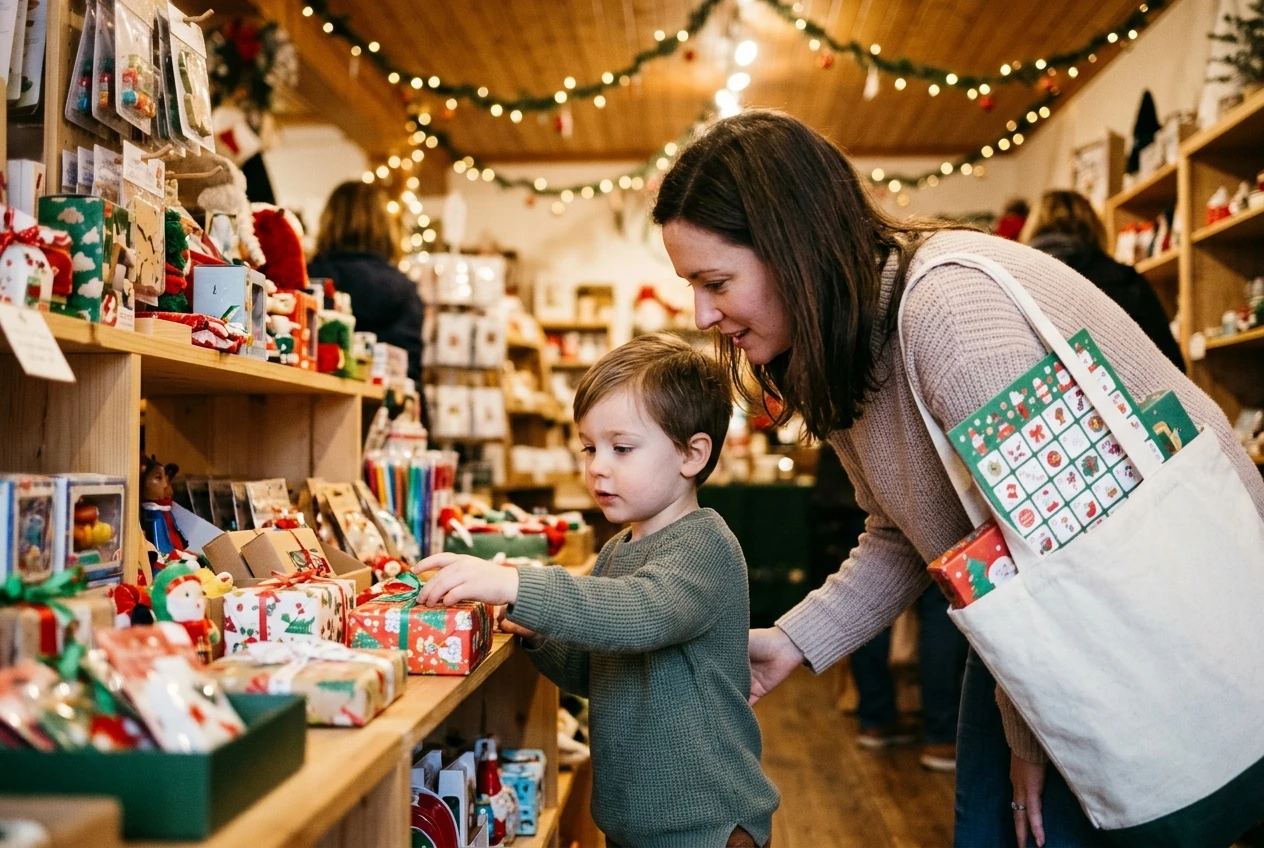
Gifts at this age can start to reward and build on that patience directly: a build-it-yourself kit that takes real time and attention, a board game simple enough for a five-year-old to follow but with actual turns to wait through, or a journal or sticker calendar for counting down to an event, which gives shape to the waiting itself rather than leaving it open-ended.
This is also the age where a child can start choosing a gift for someone else with real intention, which some families use as its own small tradition inside the bigger one. A five-year-old picking out something for a grandparent or sibling, with some guidance, is practicing a kind of patience and attention that outlasts the holiday season itself.
A simple gift and outing checklist by age to print before the season starts
A checklist works best when it’s specific enough to act on the week before an outing, not just generally true. Here’s one broken out by stage.
Newborn
- Pack for the feeding and sleep schedule, not the event’s start time
- Scope out a quiet corner for feeding before you need it
- Bring layers that come off easily indoors
- Gift idea: a car seat bunting, canopy, or clip-on white noise option
Age 1
- Time the outing around a possible stroller nap
- Do a quick babyproofing walk-through at any unfamiliar house
- Pack a familiar soft toy or board book
- Gift idea: a fold-flat ride-on toy or a travel high chair
Age 2
- Decide the exit plan and time limit before you arrive
- Watch for early signs of overstimulation, not just the meltdown itself
- Park close and choose events with an easy way out
- Gift idea: a wearable backpack, noise-reducing headphones, or a pocket fidget toy
Age 3
- Build excitement close to the event, not days ahead
- Describe what will actually happen, in concrete terms
- Pack a small bag of travel-only quiet activities
- Gift idea: a sticker book, magnetic drawing board, or small flashlight
Age 4
- Give them one real job for the outing
- Walk through the plan and expectations before leaving the house
- Gift idea: a simple camera, binoculars, or a scavenger hunt clipboard
Age 5
- Let them in on the full plan, including the waiting parts
- Acknowledge patience when it happens, rather than assuming it
- Consider letting them pick a small gift for someone else
- Gift idea: a build-it-yourself kit, a simple board game, or a countdown calendar
Printing this out and checking it against whatever’s on the calendar this season takes a few minutes and saves the kind of scramble that turns a good outing into a rough one. The right outing, matched to the age in front of you, is a better gift than almost anything wrapped under the tree.