Winter cuts down on options. The playground is frozen or dark by five, the car is cold, and a toddler still needs somewhere to put two hours of energy before dinner. The activities that fill that time well depend almost entirely on what a child can physically and mentally do, which is why a round up built for “toddlers” in general ends up useless for half the readers who open it.
This guide sorts indoor winter play by age, from one year old through five, so you can go straight to the section that matches where your child actually is right now rather than sifting through ideas meant for a different stage of development.
Why a One Year Old and a Five Year Old Need Different Winter Play
A one year old is working out that their hands can make things happen. A five year old is working out how to wait their turn, follow multi step instructions, and lose a game without a meltdown. Those are not points on the same line; they’re different jobs, and the materials that support one often bore or overwhelm the other.
Give a one year old a board game with rules and they’ll eat the pieces. Give a five year old a basic cause and effect toy they mastered two years ago and they’ll walk away in under a minute. Matching the activity to the age isn’t about forcing early learning or keeping a child “on track.” It’s about handing them something that fits the skills they’re actually practicing, so the play holds their attention long enough to be worth setting up.
The sections below are grouped by age in one year bands because the differences between a 1 year old and a 2 year old, or a 3 year old and a 4 year old, are large enough to matter for what keeps them engaged indoors. Use your own child’s current abilities as the guide if they’re working above or below the typical range for their age.
Age 1: Sensory Bins and Simple Cause and Effect Play
One year olds are gathering information through their hands and mouths, so winter play at this age should be heavy on texture, sound, and simple repeatable actions. Nothing needs rules. The activity is the material itself.
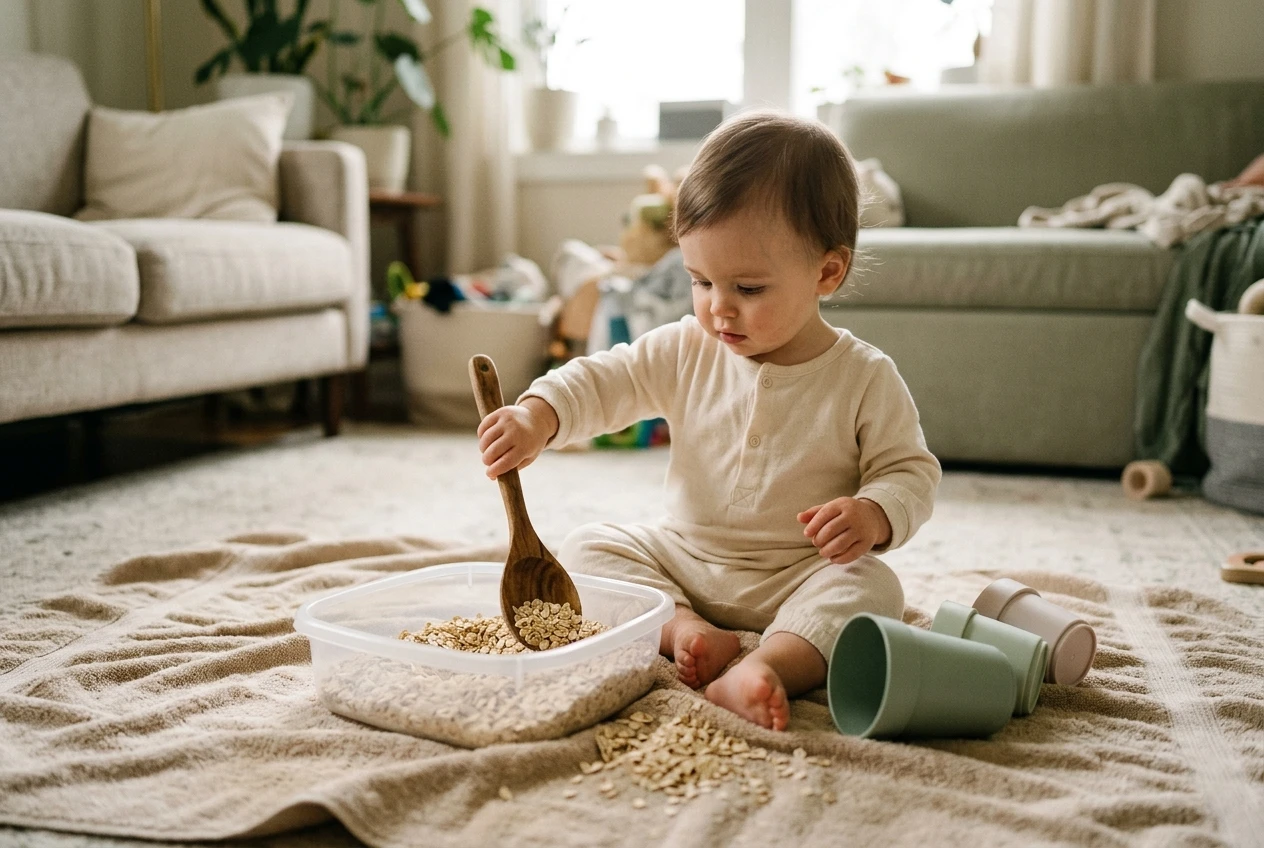
Sensory bins without small parts. Fill a shallow bin or large bowl with dry oats, cooked and cooled pasta, or shredded paper, and add a few large spoons or cups. The goal is scooping, pouring, and feeling different textures, not building anything. Skip anything small enough to choke on, since mouthing objects is still typical at this age.
Water play in the bathtub or a low tub. A few inches of water, some cups, a sponge, and a funnel will hold a one year old’s attention far longer than most purchased toys. Set a towel down first and expect splashing.
Cause and effect toys. Stacking cups that nest and knock down, a ball that rolls when pushed, a lid and container they can open and close repeatedly. The appeal here is the pattern: push this, that happens, every time. Repetition is the point, not a sign the toy has stopped working.
Simple sound exploration. Pots, wooden spoons, and a few plastic containers turned upside down make a drum kit that costs nothing. Let a one year old bang freely rather than trying to teach rhythm.
Texture bags. Fill quart size resealable bags with hair gel, water beads, or paint, seal them well with tape around the edge, and let your child press and squish them flat on a table. This gives the sensory input of a messy material with none of the actual mess.
Keep sessions short at this age, ten to fifteen minutes is often the natural limit, and expect to repeat the same few activities often. Familiarity is comforting at one, not boring.
Age 2: Pouring, Stacking and Early Pretend Play
Two year olds have more hand control and are starting to understand that objects can represent other things, which opens up pretend play for the first time. They’re also deep in a phase of wanting to do things themselves, so activities that let them practice a physical skill independently tend to land well.
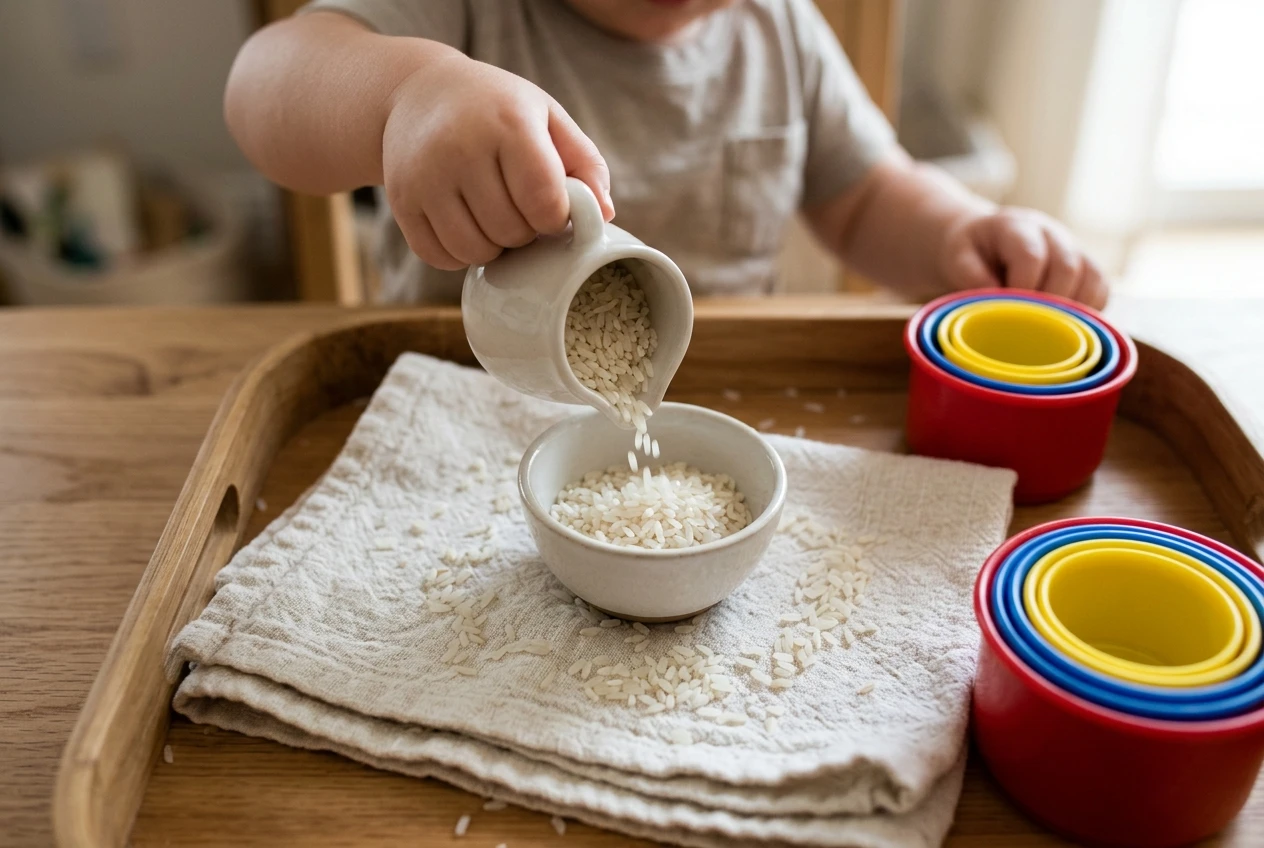
Pouring stations. Set up two or three containers and let your child pour dry rice, beans, or water from one to another. A tray or towel underneath keeps cleanup manageable. This is less about the materials and more about the hand eye coordination of aiming a stream into a target.
Stacking and nesting challenges. Blocks, plastic cups, or empty food containers in graduated sizes give a two year old a goal: build it taller, fit the small one inside the big one, knock it down and start again. The knocking down is usually as satisfying as the building.
Simple pretend play scenes. A toy kitchen, a few stuffed animals that need “feeding,” or a basket of old kitchen items like a whisk and a wooden spoon can anchor twenty minutes of pretend cooking or caregiving. Two year olds are usually imitating what they see at home rather than inventing new scenarios, so familiar household roles work better than fantasy themes right now.
Sticker play. A sheet of stickers and a piece of paper is a full activity at this age. Peeling and placing stickers is good fine motor practice, and there’s no wrong way to do it, which matters for a child who gets frustrated easily with “correct” outcomes.
Indoor obstacle course. Couch cushions to climb over, a laundry basket to crawl through, painter’s tape lines on the floor to walk along. Two year olds have a lot of physical energy and limited outdoor options in winter, so a short obstacle course redirects that energy before it turns into climbing the furniture.
Transitions are still hard at this age, so give a warning before switching activities and expect some protest regardless. That’s typical, not a sign the activity failed.
Age 3: Imaginative Play and First Crafts
By three, children can hold a pretend scenario in mind for longer, follow two step instructions, and manage simple craft tools with supervision. This is the age where imaginative play really opens up, and where crafting starts to mean an actual finished object rather than just paint exploration.
Dress up and role play. A box of old clothes, hats, and shoes lets a three year old become a firefighter, a doctor, or a shopkeeper for an afternoon. Add a few props, like a toy phone or a clipboard, and the scenario can run far longer than you’d expect.
Puppet shows. Paper bag or sock puppets, made in five minutes, give a three year old a way to act out stories with characters other than themselves, which is often easier than straight pretend play because the puppet can say things the child might not say directly.
First scissor crafts. Three is a reasonable age to introduce child safe scissors with close supervision. Cutting strips of paper to glue onto a larger sheet, or cutting along a thick marker line, builds the hand strength needed for more controlled cutting later. Keep sessions short and stay within arm’s reach.
Playdough with tools. Rolling pins, cookie cutters, and a plastic knife turn playdough from a squishing material into something closer to a craft project. Making “cookies” or “snowballs” out of playdough is a natural winter theme that doesn’t require any special supplies.
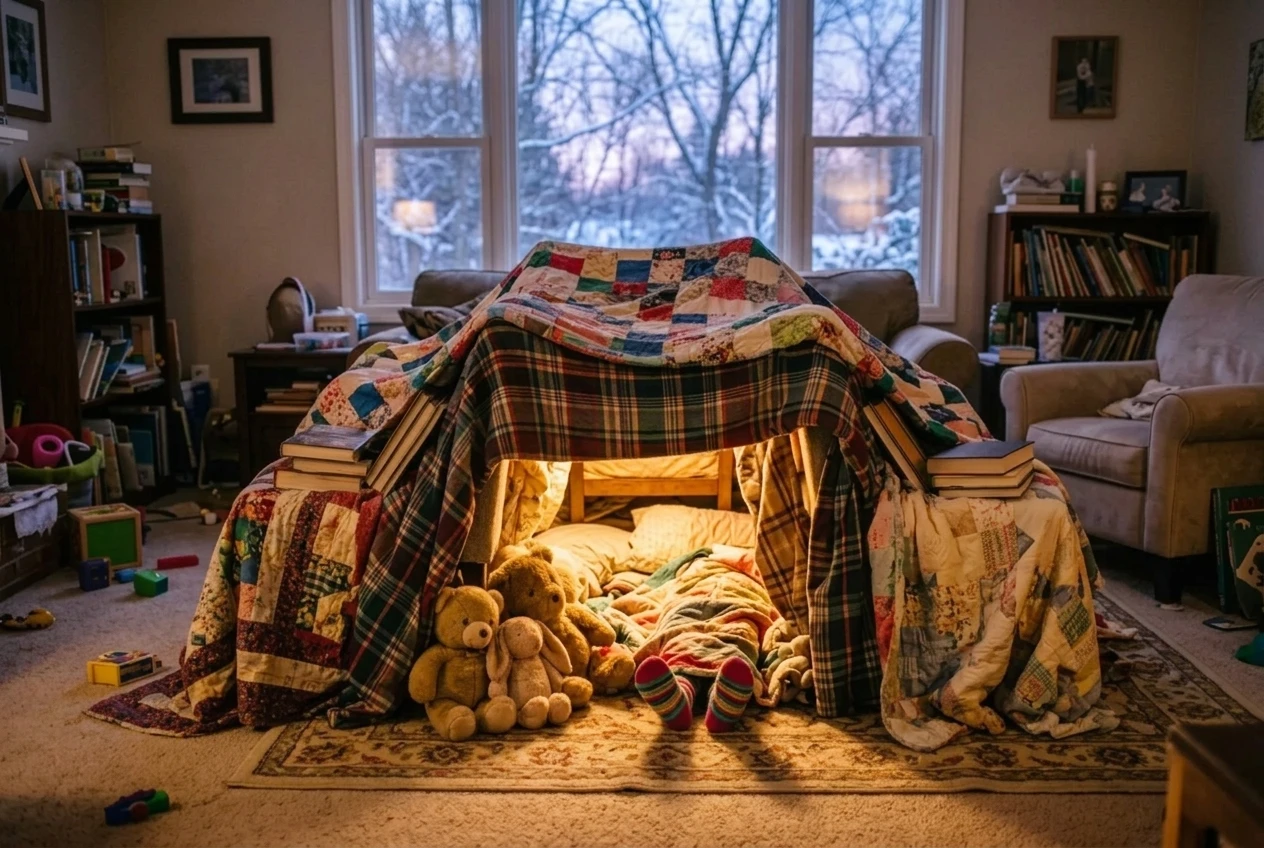
Indoor pretend camping or a blanket fort. Chairs and blankets turned into a fort, with a flashlight and a few stuffed animals inside, gives a three year old a self contained world to play in for a stretch of time without needing you to referee a storyline.
Simple sorting games. Sorting buttons, pom poms, or toy animals by color or size introduces early categorization. A muffin tin with different colored pom poms to match works well because the container does the organizing for you.
Three year olds can sit with an activity longer than a two year old, often twenty to thirty minutes, but they still benefit from choosing between two options rather than being handed a single prescribed plan. Offering “blanket fort or puppet show” gives them control over a stretch of free time that might otherwise turn restless.
Age 4: Building Challenges and Storytelling Games
Four year olds can plan ahead a little, follow more complex instructions, and sustain a pretend narrative with plot rather than just role play. They’re also ready for activities that involve a small challenge or goal, since they’re starting to care about outcomes and not just the process.
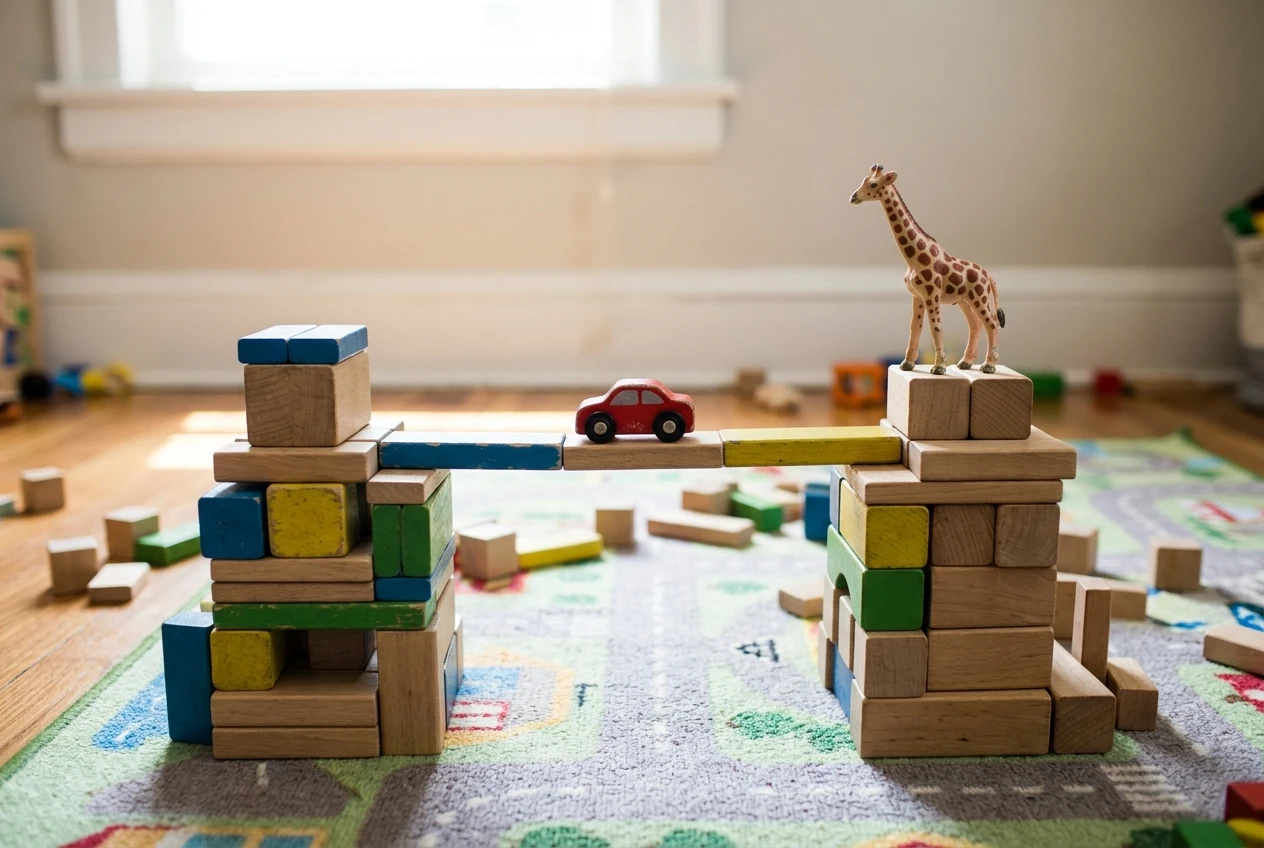
Building challenges with a goal. Instead of free building, give a specific challenge: build a tower that can hold a toy animal, build a bridge wide enough for a toy car to cross, build the tallest structure using only ten blocks. Blocks, magnetic tiles, or even cardboard boxes work. The constraint is what makes it interesting at this age, not just open ended building.
Storytelling games. Start a story with one sentence and take turns adding to it, or use a set of picture cards to build a story together. Four year olds often have strong preferences about how a story should go, which makes this a genuinely collaborative activity rather than one you’re steering entirely.
Scavenger hunts inside the house. Write or draw a short list of items to find around the house, like something soft, something red, something that makes noise. This works indoors in winter exactly as well as it would outside, and it gives a four year old a sense of mission.
More involved crafts. Paper plate masks, simple weaving with strips of construction paper, or a collage built around a winter theme like snowflakes or mittens. Four year olds can usually manage glue sticks, hole punches, and safety scissors with less direct supervision than at three, though checking in periodically still matters.
Simple board games. Games built around matching, counting, or basic strategy, where the rules are short enough to hold in mind, introduce turn taking and following rules without heavy competition. Four year olds are often still learning to lose gracefully, so keep the stakes low.
Indoor “camping” with a job list. Setting up a tent or fort and giving each child a role, like “fire watcher” or “map reader,” adds a layer of pretend responsibility that four year olds tend to take seriously.
At this age, activities that include a small decision point, which block to use next, what happens in the story, which item to find first, tend to hold attention longer than activities with a single fixed outcome.
Age 5: Games With Rules and Simple Science Experiments
Five year olds can follow multi step rules, understand winning and losing in a more settled way, and start to grasp cause and effect well enough for basic science demonstrations to make sense to them. This is the age where structured games and simple experiments become real options rather than loose approximations.
Board games and card games with actual rules. Games that involve matching, counting, simple strategy, or memory give a five year old practice with turn taking, following a sequence of rules, and handling a loss. Keep a few options on hand since attention spans still vary and a game that drags too long will lose them.
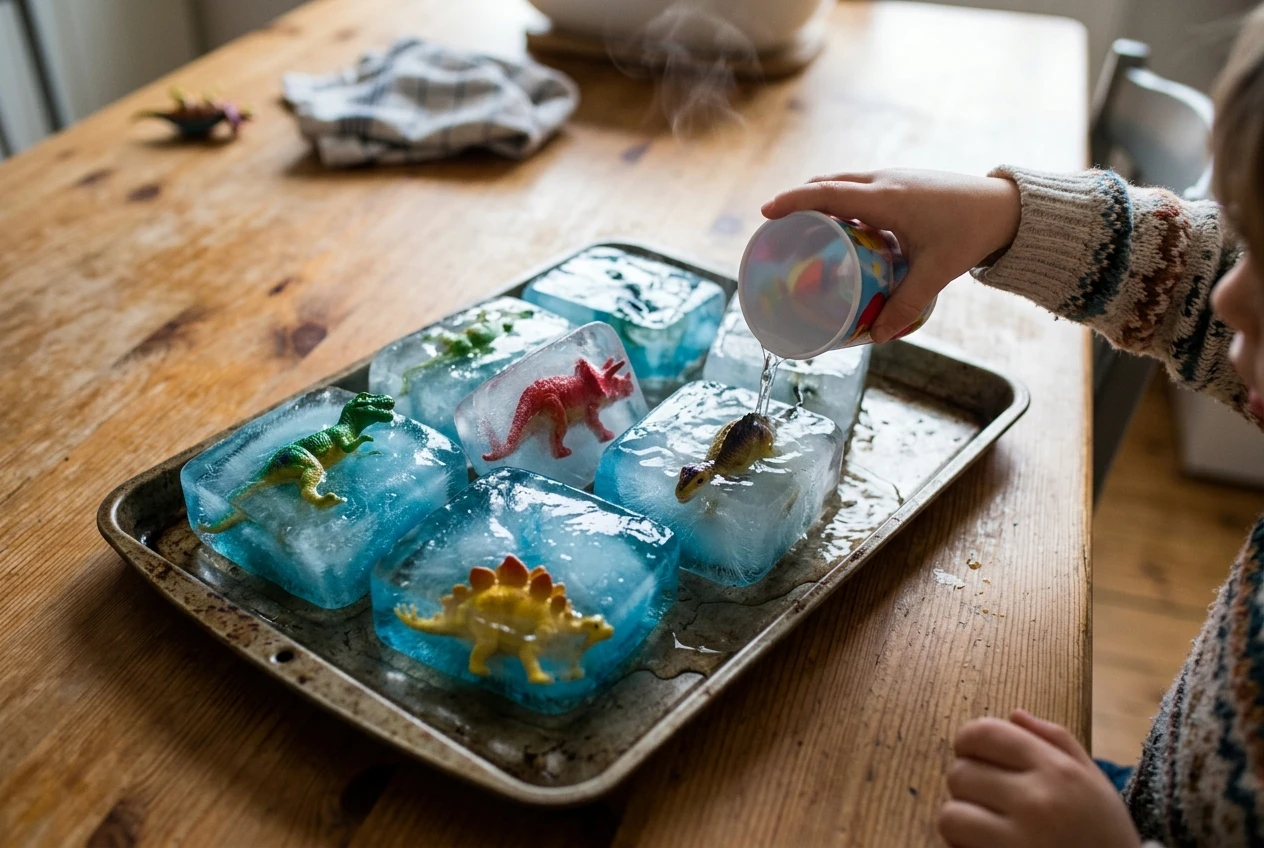
Simple science demonstrations. Mixing baking soda and vinegar, growing a bean in a wet paper towel against a window, or freezing small toys in ice cube trays to “rescue” them with warm water are all demonstrations a five year old can mostly carry out themselves with setup help. The appeal is watching something change because of what they did.
Building with instructions. Following a simple diagram to build a specific structure out of blocks or magnetic tiles, rather than building freely, introduces the idea of working toward a plan. This matters more at five than it did at four because they can now hold a multi step sequence in mind.
Writing or drawing their own story. A five year old can dictate a story for you to write down, or attempt simple words and drawings on their own, to make a book about something from their winter, a snow day, a holiday, a made up character. This combines storytelling with early literacy without feeling like a lesson.
Indoor treasure hunts with clues. Instead of a simple scavenger hunt list, a series of clues that lead from one spot to the next gives a five year old a puzzle to solve rather than just items to find.
Cooking or baking tasks with real steps. Measuring, pouring, and stirring with supervision gives a five year old a task with a clear sequence and a real result at the end. Simple recipes like no bake snacks or decorating premade cookies work well for winter afternoons.
Five year olds generally handle longer stretches of a single activity than younger children, often thirty to forty five minutes, especially when the activity has a clear goal or a game structure they understand.
Building a Weekly Rotation So Cabin Fever Doesn’t Win
A single good activity gets you through one afternoon. What gets you through an entire winter is a rotation you can return to without reinventing the plan every day.
Start by picking four or five activities from your child’s age section above and treating them as a base set for the week rather than a list to get through all at once. A Monday sensory bin, a Tuesday building challenge, a Wednesday craft, and so on gives structure without requiring new supplies each day. Children at every age in this range tend to ask for the same few activities repeatedly anyway, so a rotation that repeats on a short cycle usually matches what they want.
Keep a small supply bin stocked with the basics for your child’s age group, pom poms and sorting containers for a two year old, safety scissors and glue sticks for a three or four year old, simple board games and basic baking supplies for a five year old, so setup takes minutes rather than becoming its own obstacle on a tired afternoon.
If you have children in more than one age band, look for activities that can flex in both directions. A building challenge can be “stack it as tall as you can” for a two year old and “build a bridge a car can cross” for a four year old using the same bin of blocks. A sensory bin can hold big scoops for a one year old alongside small measuring cups for a five year old working at the same table. Shared setups like this cut down on the number of separate activities you need to manage at once.
Finally, give yourself permission to repeat an activity that worked rather than treating every day as a chance to be original. Winter is long, and a rotation a child actually wants to return to will do more for both of you than a constant stream of new ideas that get used once and abandoned.