
Going into labor is a huge milestone in any pregnancy, and it’s totally normal to have a bunch of questions about what actually happens. I’ve walked through this experience myself, and knowing what to expect can make things feel a little less overwhelming. Here’s a straightforward guide to the stages of labor, from those first signs all the way to meeting your baby.
How Labor Begins: Recognizing the Signs
Labor doesn’t always look like a dramatic rush to the hospital as shown in movies. The first signs can be subtle and might build gradually over several hours or even days. Here’s what I usually tell women to watch for:
- Regular contractions that get stronger, closer together, and don’t stop when you change positions.
- Excruciating Lower backache or a crampy feeling that will not stop, and gets stronger as time goes on. It’s kind of like period cramps, but much more persistent and very painful.
- Bloody show: This is a pink or blood-tinged discharge, which signals your cervix is thinning and opening.
- Water breaking: This could be a gush or a slow trickle of amniotic fluid. Keep in mind it doesn’t always happen before contractions start.
Braxton Hicks contractions, also called “practice contractions,” can feel similar but don’t get more intense or closer together. I had no back pain with Braxton Hicks. Timing your contractions is helpful so you can spot the real thing. If you’re unsure, it’s always worth calling your healthcare provider. They’ve heard every question in the book!
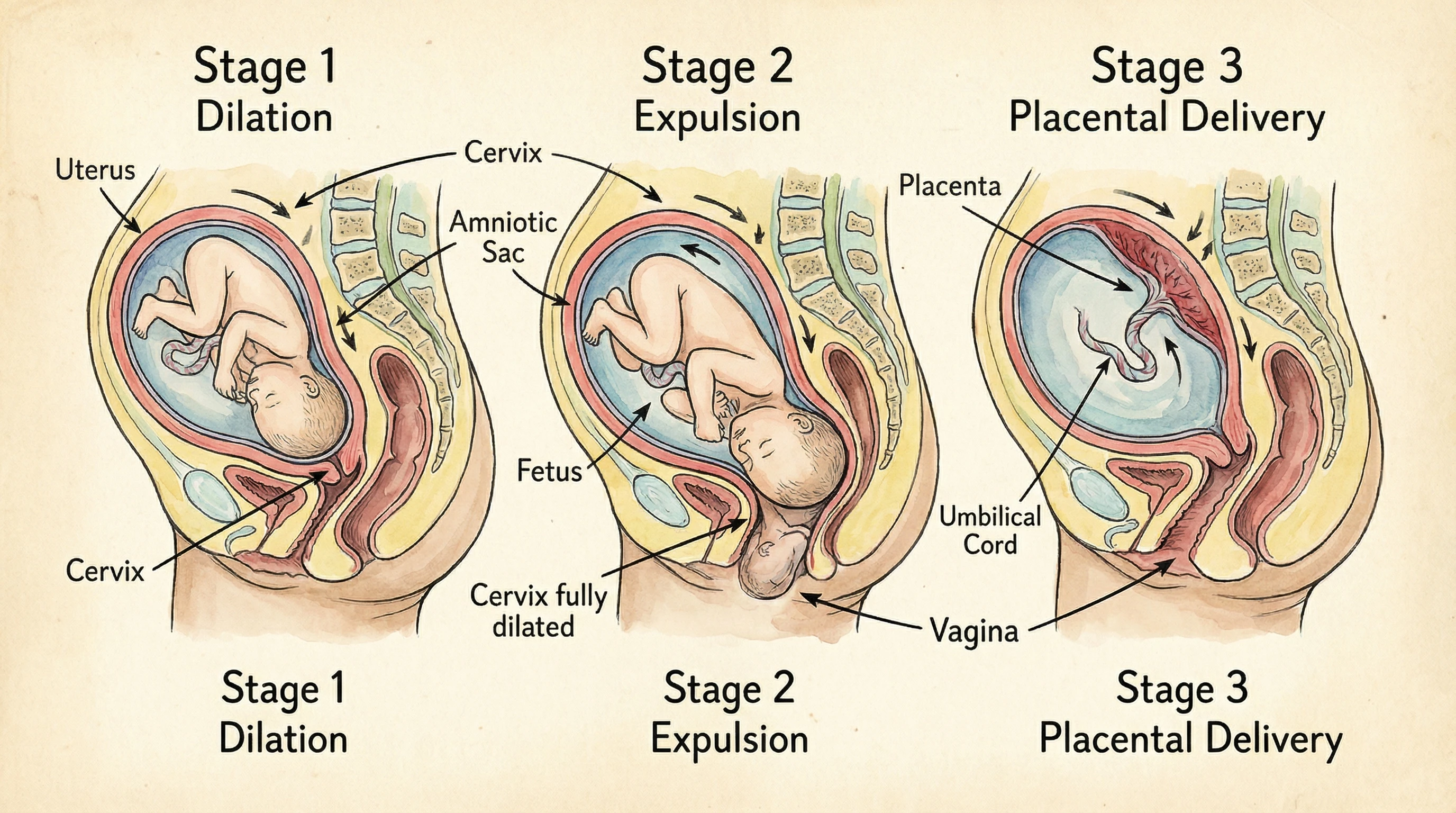
What’s Happening in Your Body: The Three Stages of Labor
Your body goes through some pretty wild changes during labor. Knowing about the stages can give you a sense of control and help you keep track of what’s going on when things start to change.
First Stage: Early Labor, Active Labor, and Transition
This is the longest stage and focuses on your cervix dilating (opening up) to 10 centimeters. It’s divided into three parts:
- Early labor: Your cervix opens from 0 to about 4 to 6 centimeters. Contractions are usually mild to moderate, coming every 5 to 20 minutes, and last from 30 seconds to a minute. You might be able to talk, walk, or even relax a bit during this part, and you can try eating light snacks or hydrating.
- Active labor: This is when things start to get serious. Your cervix goes from about 6 to 8 centimeters. Contractions get stronger, closer together (every 3 to 5 minutes), and last longer. Having support really helps here. Try different comfort measures, focus on breathing, or change positions. If you want medical pain relief, this is a good time to talk to your care team.
- Transition: The toughest and shortest part. Your cervix finishes dilating from 8 to 10 centimeters. Contractions are very strong and very close together (every 2 to 3 minutes). You might feel pressure, nausea, or even the urge to push. Many women feel emotional and shaky during transition and that’s completely normal.
It’s worth noting that some women may experience their water breaking during early or active labor, while others might not have their water break until right before delivery. If it happens at home, take note of the fluid’s color and reach out to your provider if it’s anything other than clear or pale yellow.
Second Stage: Pushing and Birth
Once you’re at 10 centimeters, it’s time to start pushing. This can take a few minutes up to a couple of hours. You’ll feel an urge to bear down, and your healthcare team will let you know how and when to push. This is tricky and I found it very irritating. My body wanted to push, and I was being instructed not to push! It is very difficult to go against the body’s response. The goal here is moving your baby through the birth canal and into your arms! It’s intense, but the end is in sight.
Sometimes, doctors or midwives will suggest changing your position to help the baby move down, and using gravity can be helpful. Listen to your body as well as the cues from your support team.
Third Stage: Delivering the Placenta
After your baby arrives, you still have a little more to do—delivering the placenta. This usually happens within 5 to 30 minutes after birth. Mild contractions will help your body push it out. Hospitals often encourage skin-to-skin bonding with your baby now, while your provider gently massages your belly to help your uterus contract and tone down any bleeding.
When to Go to the Hospital or Birthing Center
I’ve talked with many women who worry about the “right” moment to leave for the hospital. Most hospitals and caregivers recommend going in when:
- Your contractions are regular, strong, and about 4 to 5 minutes apart, each lasting for at least a minute, and this pattern has lasted at least one hour (called the “4-1-1” or “5-1-1” rule).
- You’re unable to walk or talk through contractions.
- Your water breaks, especially if the fluid is green or brown—which could signal your baby needs attention. This could be mercomium stool, which is serious for your baby.
- You notice heavy bleeding or a significant decrease in your baby’s movements.
Always trust your instincts. If you feel something isn’t right, or you just want extra reassurance, it’s perfectly fine to go in or call your provider. They are there to help you through every worry and question.
How Long Labor Can Last: Minimum and Maximum Hours
No two births are the same. Labor timing really varies person to person. Here’s a general idea of what’s normal:
- First birth: Early labor can last 6 to 12 hours, sometimes longer. Active labor and transition might add another 4 to 8 hours. Pushing can last a few minutes up to a couple of hours. Expect to be at the hospital for quite a while with your first baby, but remember, things often happen more smoothly if you bring along items to keep yourself comfortable like a pillow, snacks, or even your favorite playlist.
- Second or later births: Labor usually goes faster—sometimes half as long. Your cervix is more experienced at opening, and things move quicker. Still, every experience is unique, so be prepared for anything.
- Short labors: Some women deliver in as little as 3 to 4 hours, though this is uncommon with a first baby. These “fast labors” can feel intense but are usually over before you know it.
- Long labors: Sometimes, especially with first-time moms, labor can stretch over 24 hours. This is mostly the early labor stage dragging on. It’s tiring, but as long as you and your baby are being monitored, it’s generally safe.
Rest, food, hydration, and support are all really important if things are moving slowly. Take breaks between contractions, and remember that things can progress suddenly after a slow start.
What Doctors and Nurses Do During Labor
If you’re at a hospital or birthing center, nurses and midwives check on you often from the moment you arrive. They keep track of your vitals, offer tips, and monitor your progress. Doctors, nurse midwives, or obstetricians usually assess you at the beginning and may pop in to monitor dilation or answer questions. As delivery approaches (around 8-10 centimeters), the doctor is generally nearby for the pushing phase and delivery. Nurses tend to stay at your side for much of active labor, with the doctor handling the homestretch right before the baby is born.
For planned home births, your midwife or provider usually comes earlier to handle things, keep tabs on you and your baby, and spot any issues quickly. They carry the supplies needed to keep you safe and know when to call for extra help if needed.
Common Labor Complications
Most births go smoothly with modern pre-natal care, but it helps to know about potential bumps in the road. Here are some things to keep in mind:
- Labor stalls: Sometimes dilation stops for hours. Providers may offer natural ways to get things moving, or suggest medications to step up contractions.
- Fetal distress: If your baby’s heart rate dips or looks concerning, doctors may suggest changing positions, giving you oxygen, or, if needed, performing an emergency C-section.
- Too much bleeding: Nurses and doctors watch this closely, especially after birth. Most issues can be handled quickly without any long-term impact.
- High blood pressure: Conditions like preeclampsia can show up, bringing headaches, vision changes, or swelling. Getting swift care makes a big difference here.
- Prolonged rupture of membranes: If your water breaks but labor stalls, the risk of infection rises, so the medical team might use medications to get contractions going.
The staff is well-trained to act fast if something goes off track, and most problems can be handled safely with quick action and monitoring. Always speak up if you’re not feeling right; your safety is their top priority.
Tips That Help During Each Stage
Having the right strategies can actually make a huge difference in how you feel physically and emotionally. Here are some real-world tips I’ve found helpful:
- Stay home as long as you’re comfortable (and it’s safe): Early labor often lasts a while. Relax at home, have a snack, take a warm shower, or watch a comforting show to distract yourself.
- Move your body: Try changing positions, gentle walking, or using a birthing ball. These options can give your hips and back some relief.
- Comfort measures: Warm baths, back massages, soft lights, and calming music can make the environment cozier and boost relaxation.
- Breathing and relaxation: Breathe in through your nose and out through your mouth, slow and steady. Even simple breathing can help you cope better with contractions.
Don’t be afraid to seek pain relief or comfort, whether that’s nitrous oxide, an epidural, or just a hand to squeeze. There’s no single “right way”—follow what feels good for you.
Frequently Asked Questions About Labor
Here are common questions I hear (and wondered myself before experiencing labor):
How will I know if it’s really labor?
Real labor contractions generally get stronger and closer over time, and changing positions or resting won’t make them go away. If you’re unsure or worried, call your provider. They can talk you through what you’re feeling and help you decide on your next steps.
Can labor be shorter or longer than average?
Absolutely. Some people have quick labors, while others take their time. Both experiences are normal. The main thing is that your medical team keeps a close eye on you and your baby’s well-being at every turn.
Do you always need a doctor present for all of labor?
The doctor usually checks in early and stays close by as you approach delivery, especially when you’re fully dilated and pushing. Most of your labor is spent with nurses or midwives, who have years of experience, keeping you comfortable and on track.
When should I call or visit my provider?
If you notice any heavy bleeding, less movement from your baby, fever, or just feel off, reach out right away. Every question is welcome—your care team wants you to feel safe and supported no matter how many times you ask for help.
Wrapping Up: What to Expect on Your Labor Day
Preparing for labor is about being informed, staying flexible, and knowing you’re not doing this alone. Most labors move through these three stages, with nurses and doctors guiding you at each step. Keep an eye out for the signs, know when to head for the hospital, and feel good about reaching out for support whenever you need it. Every birth story is unique—so trust yourself, trust your healthcare team, and remember you’re stronger than you think. Wishing you strength and lots of support on your labor adventure!