
The dark line that shows up on the belly during pregnancy, known as the linea nigra, is one of those changes that often catches people off guard. I remember the first time I spotted it, I panicked a little, wondering if I had done something wrong or if it meant anything more than a mark on my skin. Turns out, it’s pretty common and has a straightforward reason behind it. This guide lays out what the dark line is, what it means during pregnancy, who gets it (and who doesn’t), how it changes after birth, some popular myths, and tips for taking care of your skin during this time.
The Basics: What Is The Dark Line on the Belly?
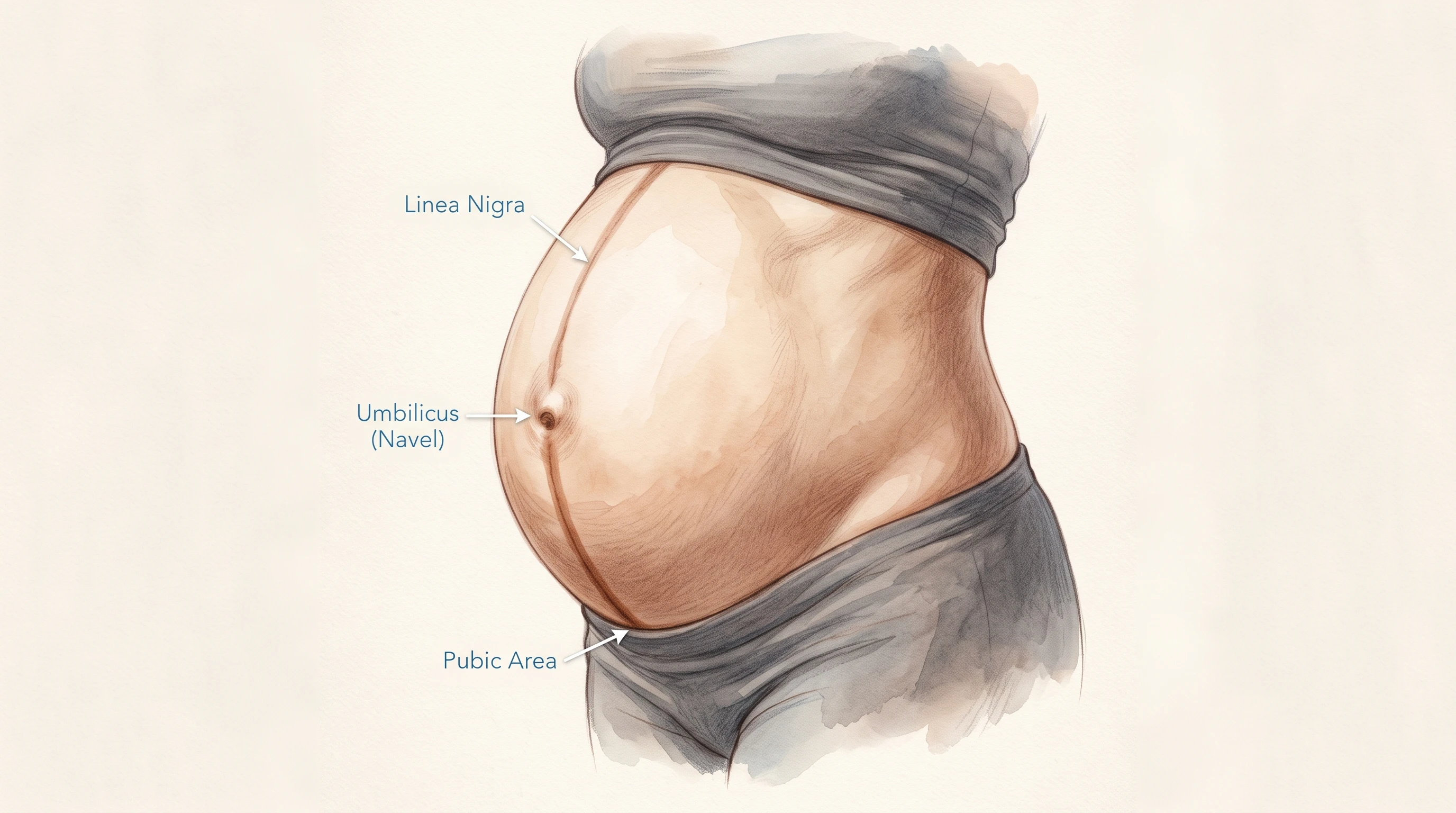
That dark stripe that often appears running down the center of the belly in pregnancy is called the linea nigra. In simple terms, it’s just a line of darker skin pigment that stretches from your belly button down toward your pubic area, and sometimes goes up past your navel too. It can range from light brown to really deep brown or almost black, depending on your natural skin color. The word “linea nigra” literally means “black line” in Latin (even though it rarely looks fully black).
So, why does this even happen? It’s all about hormones. The same pregnancy hormones (mostly estrogen and increased levels of melanocyte-stimulating hormone) that can darken your nipples or trigger a pregnancy mask on your face (melasma) are also to blame for the linea nigra. Your skin just decides to produce more pigment in some areas, and that stripe is one of the most visible spots.
Who Gets The Linea Nigra (and When Does It Show Up)?
Not every pregnant person gets the dark line, but it’s super common; way more common than not. Studies suggest that a good chunk of people notice some degree of it, and those with medium to darker skin tones are more likely to see a prominent line because their skin naturally produces more melanin. Fairskinned people can also get it, but it might be lighter or not very noticeable at all.
When I was pregnant with our son, I got a very faint line and it did not bother me at all. I looked at it like a badge of pregnancy! I am very fair skinned, blond and blue eyed, so it was very light. My sister, on the other hand, got a much darker line, and with both of her pregnancies. However, she is darker skinned, dark brown hair and brown eyes. We had the same parents!
Linea nigra usually shows up in the second trimester (that’s around week 13 to 27) but sometimes it can pop up earlier or even later. Some folks say they see it even before they realize they’re pregnant, while others don’t notice it until well after they’re showing. How much or how dark it gets varies from one pregnancy to the next, even for the same person. On top of that, lifestyle factors like sun exposure may also affect how apparent the line looks. For instance, sunlight can make existing pigmentation even darker, so if you’re outdoors a lot, you might notice the line pop more during those months.
Family history can play a role here too. If your mother, sister, or even grandmother had a noticeable linea nigra, you may be more likely to get one yourself. This isn’t set in stone, but genetics often have a say in how our bodies respond to hormonal changes.
What To Expect After Birth
After you’ve delivered, the dark line doesn’t disappear immediately. For most people, it fades gradually over a few months as hormones return to more typical levels. How fast that happens depends on your skin and your body’s natural pace of change. In some rare cases, a faint version of the line might linger for years, but that’s pretty unusual. If you’re breastfeeding, your hormone levels are still a bit different, so the fade can be a tad slower.
There’s nothing you need to do to get the line to fade; it’s more about time and patience. If it bothers you, gentle skin care and avoiding too much sun exposure can help your skin tone return to its usual color. Honestly, there’s no proven skin cream or home remedy that guarantees to erase it overnight. You might stumble upon advice online touting natural remedies like lemon juice or coconut oil, but at best these can help your skin’s texture and comfort; they won’t alter pigments that are deep in the skin.
Staying hydrated and maintaining a balanced diet with vitamins that support skin health, like vitamins A, C, and E, can help your skin renew itself. While this doesn’t target the pigment directly, overall wellness usually shines through your body’s largest organ—your skin.
5 Common Myths About Linea Nigra
Linea nigra is surrounded by a bunch of old wives’ tales and rumors. Here are five myths I hear all the time, plus what’s really going on:
- The line predicts your baby’s gender.
Some people say that if the line runs only up to the navel, you’re having a girl; if it goes above the navel, it’s a boy. There’s absolutely no evidence for this one. The line’s length and darkness are all about hormones, not babies’ genders. - The line shows how healthy your pregnancy is.
You can have a thick, dark linea nigra and a totally healthy baby, or none at all and still have a great pregnancy. It’s not a sign of your prenatal wellness. - Only people with dark skin get it.
Anyone can get a linea nigra, but it’s going to look more dramatic on darker skin because of higher melanin. Lighter skin might just get a faint line. - Moisturizing the belly can prevent the line.
Applying lotion is awesome for dry skin and comfort, but it doesn’t prevent the pigment change that creates linea nigra. It’s going to show up if it wants to, regardless of how much lotion you use. - You can “scrub” it off.
This is a persistent one, but don’t try it. Linea nigra is not dirt; it’s pigment inside the skin. Scrubbing will just leave you with irritation or rashes.
Any Health Concerns to Know About?
For almost everyone, linea nigra is harmless and temporary. It’s just a cosmetic sign of normal pregnancy hormones doing their thing. You might not love how it looks, but it’s not a warning sign or a medical issue.
There are a few times when it’s worth checking with a healthcare provider:
- If the darkening shows up in lots of other unusual spots (not just on your belly)
- If you notice other skin changes, like a new rash, itching, or pain
- If the line appears outside of pregnancy, especially if you haven’t noticed it before
These usually aren’t anything serious, but sometimes hormonal imbalances or other conditions (like Addison’s disease) can also cause skin pigmentation changes, so a quick checkup brings peace of mind. The American Academy of Dermatology is a good resource if you’re looking for more details about this.
Are Moisturizers or Topicals Helpful?
People try a whole range of body creams, oils, and even “bleaching” creams to deal with the linea nigra, but there’s no science backed cure. Plain moisturizers can help the skin stay comfy and reduce itchiness around your growing belly, but nothing you can buy over the counter is going to block or erase the pigment change.
If you want to support overall skin health, a gentle moisturizer or belly balm is a good pick. Look for fragrance free options if your skin is sensitive. Sunscreen is also helpful, as sun exposure can sometimes make pigmentation more pronounced. So if you’re spending time outside with your belly exposed, covering up or using sunscreen is a good idea.
Don’t use harsh skin lighteners, acids, or chemical peels during pregnancy unless specifically recommended by your doctor. Many aren’t considered safe during pregnancy and can do more harm than good. Some skin lighteners may contain substances like hydroquinone, which is not recommended when pregnant or breastfeeding, so always check the label and consult your healthcare provider before trying anything new.
Other Useful Facts About Linea Nigra in Pregnancy
- Genetics can play a part. If your mom or sister got a linea nigra with their pregnancies, you might be a bit more likely to get one too.
- It can show up outside of pregnancy. Some hormonal conditions that increase melanin can cause a similar line even when you’re not pregnant, but it’s rare.
- You might not get it every pregnancy. I know people who had it in one pregnancy but not in another. Hormones work in mysterious ways and are always changing.
- It serves a biological purpose in other animals, not humans. In some animals, abdominal markings help with things like litter placement during feeding. For people, there’s no real “function”—it’s just one of those quirky human things.
- The line is always there, just not always visible. Everyone has a “linea alba” (a pale line in the same spot), but it usually only darkens due to hormonal changes.
Frequently Asked Questions
Does linea nigra mean something is wrong?
Nope! For the vast majority, it’s totally normal and doesn’t mean anything is wrong with you or your baby.
Will the line ever go away completely?
For most people, yes. It fades over time after birth, but the timeline is different for everyone. It might be a few months or longer if you’re breastfeeding.
Can anything (like diet or skincare) help prevent it?
There’s not much you can do. Eating well and caring for your skin is always helpful, but nothing blocks the hormonal pigment change.
Is there a way to cover it up if I want to?
If you want to hide it, regular foundation, concealer, or body makeup will do the trick temporarily if you’re wearing a bikini or crop top.
What To Remember About Linea Nigra
Seeing a dark line on your belly is just a normal sign that your body is working hard during pregnancy. It’s one of many changes that might surprise you, but it’s nothing to worry about. The line will likely fade on its own, and with a little patience and self-care, your skin will bounce back as your hormones level out. If it’s ever paired with other concerning symptoms, your doctor or midwife will know what to look for. Otherwise, it’s just another badge of pregnancy that millions of people get to share.